
By Kristin Rose, Central Connecticut State University
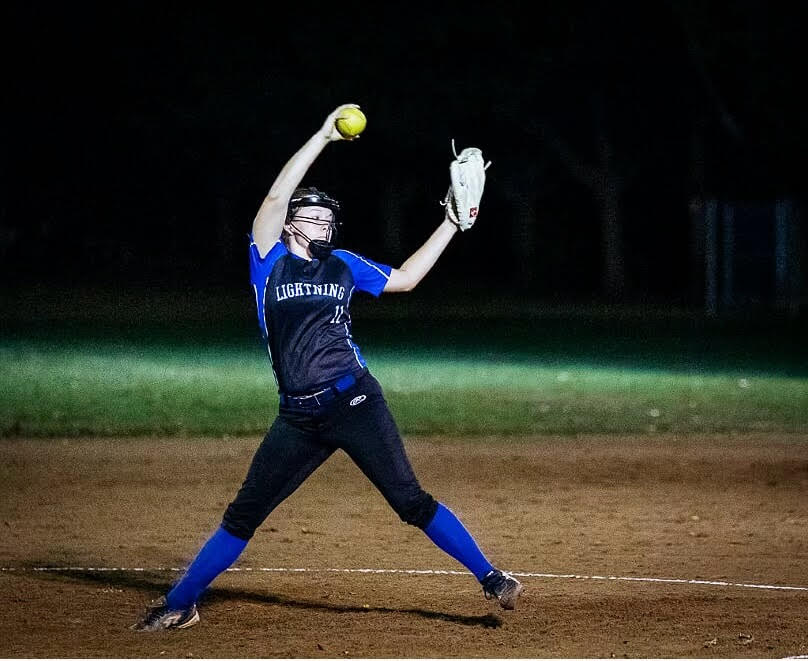
Tiffany Lubanski said she was forced to say goodbye to the game of softball as she struggled with depression and was belittled by her coaches at Central Connecticut State University.
After being recruited as a pitcher in her freshman year in 2022, she said that once she reached out to her coaches for help, they told her that her depression would abate as the season went on. When Lubanski took a mental health day, she said her teammates told her the coaching staff criticized her actions as “weakness.”
“I think about the way I was treated almost every day,” Lubanski, of Enfield, said. “I think about how much I would’ve loved to stand up for myself, but it is not who I am to show any form of disrespect.”

Logan Wenzel was a pitcher on the baseball team at Central who transferred to Saint Peter’s University in New Jersey after his sophomore year in 2023. He said with a lack of support and opportunities at Central, mental health consumed his day-to-day life.
“I was so concerned about being someone the coaches wanted me to be that I lost all self- respect,” he said. “I didn’t know why I was treated the way I was, made to think I was soft and never worked hard. I was told to do things others didn’t have to ever do. I just ate it and moved on.”
Nationally and in Connecticut, mental health continues to be an issue within collegiate sports. Illnesses vary from anxiety and depression to eating disorders. Some athletes say they prioritize performance and physical health with no thought given to the mental aspect of the game.
Positive experience
CCSU Athletic Director Tom Pincince said the athletic staff cannot discuss specifics pertaining to student-athletes, but that their mental health is important to him and his coaches. He said the department focuses on providing a positive experience for each of its 425 athletes.

“Overall, it is important to get everyone in the department to understand how things have really changed in the last five to seven years,” he said. “To make sure everyone knows that the mental health of student-athletes is paramount in everything that we do.”
Like many universities, Central has added services to address the mental health needs of athletes. The Wellness Room is a place where CCSU athletes can go to seek help for their mental or physical well-being.
Athletes also have their own licensed professional counselor to get advice on handling their emotions, and teams hold group meetings with counselors.
Statistics on mental health diagnoses among Central athletes were not available. A 2021 study found that 41% of CCSU students in general had depression, 34% had an anxiety disorder, 13% had suicidal ideation in the past year and 12% reported having an eating disorder, according to The Recorder, the campus newspaper.
Davin Williams, a counselor at the campus Wellness Center, said the rates are higher among CCSU students who come there for help.
“Anxiety and depression are roughly around 80% and ADHD is a possible 60%,” he said. “Substance and alcohol misuse is 60%.”
The evidence from national research into athlete mental health is mixed.
According to a recent study by Athletes for Hope, 33% of college students nationally will experience symptoms of depression, anxiety or other mental health conditions. Thirty percent of that group will seek help while only 10% of athletes with mental health conditions will reach out for help, it found.
But a survey of 23,000 student-athletes by the National Collegiate Athletic Association between September 2022 and June 2023 shows that mental health concerns have decreased in almost every category compared to the 2020 and 2021 surveys.

For men’s sports, the percent who reported feeling overwhelmed dropped from 25% to 17% and those feeling mentally exhausted dropped from 22% to 16%. For women’s sports, the percentage for those feeling overwhelmed decreased from 47 % to 44% and those feeling mentally exhausted dropped from 38% to 35%.

“No sympathy”
Lubanski said she had a fear of her feelings getting back to the coaches. She said she worried that they would treat her worse if she opened up to them about being depressed. She quit softball in 2023 but is still enrolled at Central.
“I was given no sympathy,” she said. “I never felt comfortable talking to people within the athletic department because nothing was confidential. It was always relayed back to coaching staff.”
Three teammates agreed that they felt Lubanski was mistreated, but they asked not to be named so their team’s season wouldn’t be disrupted.
Alex Rogers, a CCSU teammate of Lubanski’s from Southington, also decided it was time to put the glove down because she fell out of love with the game.
“It was no longer a time and space to be myself and escape the pressures of life, but rather, it became the main source of pressure and anxiety,” she said.
Rogers said her daily schedule became hard to keep up with, and she was losing touch with the real world.
“I no longer wanted to go to class, which I usually enjoyed doing,” she said. “I no longer wanted to spend time with friends, and most of my time was spent sitting in my room stressing about the next practice or game.”
Rogers said she was becoming a stranger to herself and her loved ones.
“People in my life started to notice the change in my personality, and I reached my breaking point when my sister told me that she wanted the old me back,” she said. “Hearing that from my sister solidified the fact that playing softball was breaking me down and turning me into someone I did not know, and it was time to walk away and work on rebuilding myself.”
Mental health has affected some players on other Central teams, including baseball, women’s basketball and football. Some said CCSU gave them the help they needed, but Wenzel, the baseball transfer, said he no longer has mental health battles at Saint Peter’s.
CCSU baseball player Michael Torniero said the baseball program does not discuss anything relating to mental health.
Some Central athletes, including women’s basketball player Belle Lanpher, praised the help the athletic department provided them when they encountered mental health problems.
“I think CCSU does a good job of making student athletes feel heard and help them get the treatment they need,” Lanpher said. “Our entire coaching staff does check ins often with us to ensure our mental health is all alright.”
Football player Alec Ambrosia said he has been affected by mental health, but it has been easy to manage with the resources offered. He said the football program gave him a family, taught him life lessons and has helped shape him into the person he is today.
“We have a student-athlete Wellness Room that has snacks and games and someone in there to talk to if you are having a bad day,” Ambrosia said. “We also have numerous mental health meetings every semester.”
Transfer portal
Amy Strickland, the associate athletic director of compliance and the senior women’s administrator at Central, said on average, 45 athletes have entered the transfer portal in the last six years. She said their reasons vary from not getting enough playing time to scholarship issues or wanting to finish their career elsewhere.
Over the last three years, the transfer portal has grown nationally and will continue to grow as college athletes can now transfer without losing years of eligibility. From 2021 to 2023 in all Division I sports, 34,999 student athletes entered the portal, the NCAA reports. In all Division II sports, 8,521 athletes entered the portal. These numbers have increased every year.
A 2023 NCAA survey found that 61% of female athletes and 40% of male athletes reported that they considered their mental health as part of their decision to enter the transfer portal.
Strickland said some athletes don’t want to have that conversation with her.
“Sometimes I ask them and sometimes I don’t,” she said. “If I feel like there is a concern, we will have that conversation, but usually by the time they get to me, they have already made that decision and they aren’t necessarily sharing with me on why they are going.”
Whether it is questioning their major or their passion for the sport, Strickland will hold confidential meetings with athletes to provide information and help them make the best decision for themselves.
“Some athletes are just so burnt out because they have been playing the sport since the age of 5 and when they get here, they start to question what they really want,” she said.
Although Strickland is not a counselor, she said she will refer students to Molly McCarthy, the assistant athletic director for compliance and student services, when she feels it is necessary.
McCarthy provides counseling to athletes and gives out items to her athletes to help calm the mind, including play dough, stickers and fidget toys. Sometimes McCarthy will refer athletes to the Wellness Center for counseling.

“I always try to implement some new strategies and try to put an emphasis on empowering students to check in with themselves,” McCarthy said. “I work with them on mindfulness techniques, meditation, anxiety reduction and anxiety-calming strategies because that’s the thing that generally students are experiencing – anxiety – and not knowing how to manage that can translate into depression and other issues.”
Continuous support
Athletic Director Pincince said Central is always reminding the athletes that there is continuous support for them.
“There is not one ultimate solution. We will take the necessary steps to help them and support them,” he said. “We do not push the athletes away and say ‘we did all we could have.’”
Williams said he sees about 70% of first-year student athletes in the Wellness Center.
“At a DI level, you want to win, and you want to compete, but at what cost?” he said. “Athletes are people and they need to care of that person, take care of themselves.”
Pincince said about 15 to 20, or about 4% of the athletes, use the Wellness Room regularly. He said Central has made strides in dealing with athletes who suffer from mental health problems, but there is always more than can be done.
“I think we have improved immensely over the last years,” Pincince said. “But there is a long way to go.”
Walking away from the game
Originally ecstatic to play for Central, Lubanski said to this day, she is still affected by how she was treated.
“There was a lack of respect I was receiving from the coaching staff. I was constantly being called out for not being a good enough athlete,” she said. “I was told on multiple occasions that I wasn’t good enough, that I wouldn’t be good enough to play in the game.”
Lubanski emphasized her love for her teammates. She still goes to home games to cheer them on.
And she said there was one coach she is grateful for: lift coach Michael Piper. She said he reached out to her after noticing she was struggling.
“I am still thankful for him because he was the only one who made me feel valued for being a human being along with an athlete,” Lubanski said.
Lubanski said she will think about the way she had to end her career for the rest of her life.
“I had to choose my mental health or continue to play the game that was taking the value of life from me every single day,” she said. “Every day I pray another girl doesn’t have to be treated like I am treated.”
Kristin Rose was a member of the CCSU softball team from 2020-23. She is a 2024 graduate of the CCSU Journalism Department.
Leave a Reply